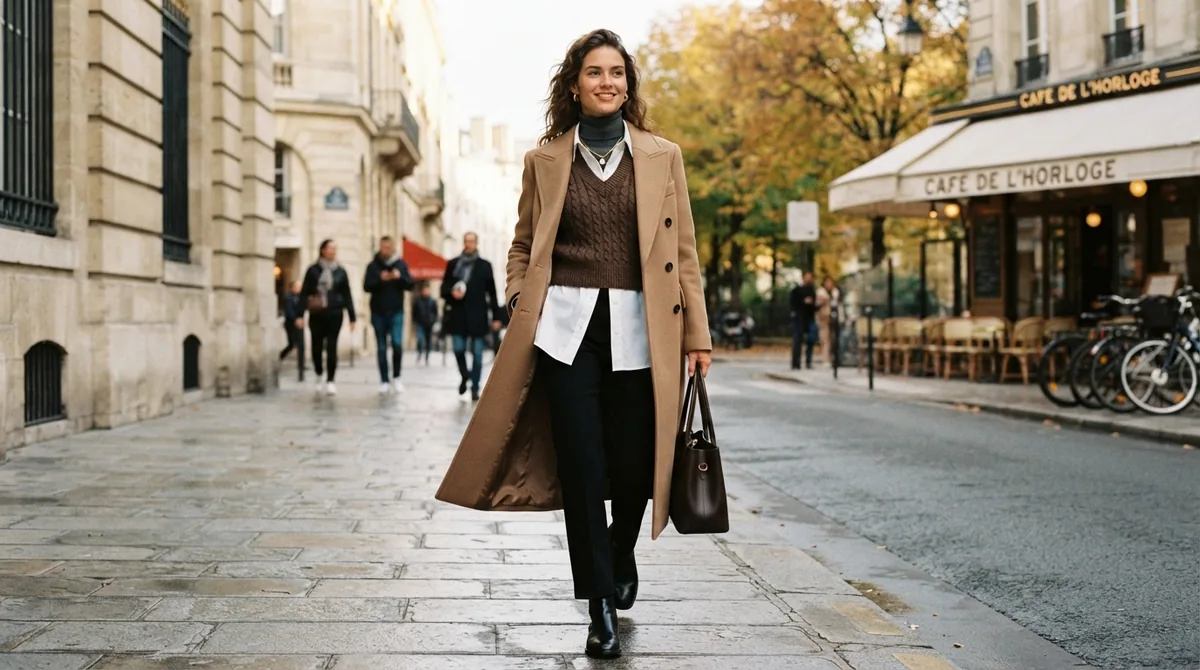
Good style is often less about owning more clothes and more about seeing familiar pieces with a clearer plan. With smart casual outfit ideas for different occasions, the goal is to create combinations that feel intentional without becoming difficult to wear. A useful outfit should support the day ahead, look coherent from head to toe, and still feel like something you would genuinely choose again. This guide breaks the topic into practical decisions so you can apply the ideas with pieces you already understand.
1. Understand the difference between relaxed tailoring and formal businesswear
Understand the difference between relaxed tailoring and formal businesswear. A strong outfit usually gives the eye somewhere to land. That could be a jacket, an interesting shoe, a bag, a neckline, or simply a clean silhouette. Problems often appear when every part tries to be the highlight. If one item is visually strong, give it quieter companions. If everything is understated, create interest through shape or texture rather than adding several decorative pieces. This approach keeps the outfit expressive without making it difficult to understand at a glance.
For everyday use, keep the adjustment proportional to the setting. A workday, weekend errand, lunch, and evening plan can use the same basic principle at different levels of polish. Change the fabric, footwear, or accessory scale rather than rebuilding the entire look. This is especially helpful when you need an outfit to move between settings. The clothes stay recognizable, but the final impression becomes more deliberate because one or two details are doing the specific work the occasion requires.
2. Use a blazer with trousers, jeans, or a simple dress depending on the occasion
Use a blazer with trousers, jeans, or a simple dress depending on the occasion. Before you commit, move around in the clothes, sit down, check the side view, and imagine the actual setting. Small issues that are invisible in a mirror can become obvious after ten minutes: a hem catches on shoes, a bag strap fights with a jacket, or a layer bunches under outerwear. These are not minor details because repeated adjustment changes how confident and relaxed the outfit feels. A practical final check often improves a look more than adding another accessory.
If you are unsure whether the idea suits you, photograph the outfit in natural light and look at the overall shape before focusing on small details. Photos make it easier to notice balance, repeated colors, and whether one item dominates unexpectedly. Then make only one revision. The point is not to judge your body or chase a particular silhouette; it is to see how the garments relate to one another. That makes the next decision more objective and usually much faster.
3. Keep shoes polished even when the clothing is relaxed
Keep shoes polished even when the clothing is relaxed. The most useful styling idea is one you can repeat in a slightly different way. If a combination works, identify what made it successful: the proportions, the color relationship, the shoe shape, or the layer. Then apply that same logic to another piece rather than trying to copy the outfit exactly. This turns one good look into a personal formula. Over time, a small set of reliable formulas can make everyday dressing faster while still leaving room for variety and seasonal changes.
A simple way to apply this is to test the idea with pieces you already wear often. Use one familiar base, make the single change described above, and compare the result before adding anything else. That keeps the experiment useful because you can see which adjustment created the improvement. It also prevents styling from turning into shopping. If the change works across more than one outfit, it is likely a dependable part of your personal approach rather than a one-time effect.
4. Choose fabrics that hold their shape without looking rigid
Choose fabrics that hold their shape without looking rigid. Many outfits become less effective when extra pieces are added after the main idea is already complete. Once the silhouette works, the colors feel connected, and the outfit suits the occasion, pause before adding another layer or accessory. Ask whether the new item improves function, balance, or personality. If it does none of those things, it may simply create noise. Restraint does not mean minimalism; it means letting the strongest parts of the outfit remain visible.
For everyday use, keep the adjustment proportional to the setting. A workday, weekend errand, lunch, and evening plan can use the same basic principle at different levels of polish. Change the fabric, footwear, or accessory scale rather than rebuilding the entire look. This is especially helpful when you need an outfit to move between settings. The clothes stay recognizable, but the final impression becomes more deliberate because one or two details are doing the specific work the occasion requires.
5. Use one elevated element such as tailored trousers or a structured bag
Use one elevated element such as tailored trousers or a structured bag. Inspiration is most helpful when you translate it to your own proportions, climate, and routine. A combination that looks effortless in a photograph may depend on a heel height, coat length, or fabric that does not fit your day. Keep the underlying idea and change the details. You might preserve the color relationship but use flatter shoes, or keep the silhouette while choosing lighter fabric. Adaptation creates outfits that feel personal and makes useful ideas last beyond a single trend cycle.
If you are unsure whether the idea suits you, photograph the outfit in natural light and look at the overall shape before focusing on small details. Photos make it easier to notice balance, repeated colors, and whether one item dominates unexpectedly. Then make only one revision. The point is not to judge your body or chase a particular silhouette; it is to see how the garments relate to one another. That makes the next decision more objective and usually much faster.
6. Keep color combinations controlled and easy to read
Keep color combinations controlled and easy to read. After wearing the outfit, notice what you reached for again and what caused friction. Maybe the color combination felt right but the bag was inconvenient, or the silhouette worked only with one specific shoe. Those observations are useful data for future dressing. You do not need a formal wardrobe system; a few photos or mental notes are enough. The aim is to build a clearer sense of your own repeatable choices so getting dressed becomes easier, not more complicated.
A simple way to apply this is to test the idea with pieces you already wear often. Use one familiar base, make the single change described above, and compare the result before adding anything else. That keeps the experiment useful because you can see which adjustment created the improvement. It also prevents styling from turning into shopping. If the change works across more than one outfit, it is likely a dependable part of your personal approach rather than a one-time effect.
7. Avoid too many sporty details in settings that lean polished
Avoid too many sporty details in settings that lean polished. This works best when you decide what the outfit needs to do before judging how fashionable it looks. Think about walking, sitting, weather, the formality of the setting, and how long you will wear the clothes. Those practical details narrow the choices in a useful way. Once the function is clear, you can refine color, shape, and accessories without constantly rebuilding the outfit. The result usually feels calmer because every item has a reason to be there.
For everyday use, keep the adjustment proportional to the setting. A workday, weekend errand, lunch, and evening plan can use the same basic principle at different levels of polish. Change the fabric, footwear, or accessory scale rather than rebuilding the entire look. This is especially helpful when you need an outfit to move between settings. The clothes stay recognizable, but the final impression becomes more deliberate because one or two details are doing the specific work the occasion requires.
8. Adjust the outfit with outerwear rather than rebuilding it completely
Adjust the outfit with outerwear rather than rebuilding it completely. Proportion is often the difference between an outfit that feels accidental and one that feels considered. Look at where hems end, how much volume sits on the top and bottom, and whether the shoes visually support the clothing. You do not need perfect symmetry. In fact, a little contrast between fitted and relaxed shapes often creates more interest. The important part is that the silhouette reads clearly instead of letting every piece compete for the same amount of space.
If you are unsure whether the idea suits you, photograph the outfit in natural light and look at the overall shape before focusing on small details. Photos make it easier to notice balance, repeated colors, and whether one item dominates unexpectedly. Then make only one revision. The point is not to judge your body or chase a particular silhouette; it is to see how the garments relate to one another. That makes the next decision more objective and usually much faster.
9. Use jewelry and belts to sharpen a simple base
Use jewelry and belts to sharpen a simple base. Color does not have to match exactly to feel coordinated. A repeated neutral, a related undertone, or one small accent can connect separate pieces without making the outfit look overly planned. If the combination feels busy, reduce the number of strong colors before changing the clothes themselves. If it feels flat, add contrast through a deeper shade, lighter layer, or accessory. This keeps color useful as a structure for the outfit rather than turning it into a rigid set of rules.
10. Match the level of formality to the venue instead of relying on one universal formula
Match the level of formality to the venue instead of relying on one universal formula. Texture and fabric weight affect how an outfit reads even when the colors are very simple. Crisp cotton creates a different mood from soft knitwear, while denim, leather, linen, and satin each change the level of structure. When several pieces are similar in color, texture helps separate them visually. When the silhouette is already complex, smoother fabrics can calm the look. Paying attention to drape also improves comfort because clothes that move naturally are easier to wear for longer periods.
Put the idea into practice
Choose one combination to test this week and keep the experiment simple enough that you can judge it clearly. Once the basic idea feels comfortable, add variation through color, texture, or accessories instead of changing everything at once. For another closely related way to expand the same wardrobe, read Comfortable Outfit Ideas That Still Look Stylish. That next step keeps the focus within the same styling area while giving you a different practical angle to try.
Final takeaways
The strongest approach is to treat these ideas as a flexible toolkit rather than a checklist. Start with the parts that solve a real problem in your wardrobe, repeat the combinations that feel natural, and adjust details as your routine or season changes. Style becomes easier when you can explain why an outfit works for you. That clarity helps you buy less randomly, use more of what you own, and create looks that feel polished without requiring a complicated process.